
Menu
Fridge Runtime Calculator
Fridges are tricky because compressor surge and cycling matter more than the simple label wattage.
Quick answers by battery size
Server-rendered examples using this scenario's sourced planning default. Use the calculator for your exact station and settings.
Swipe table sideways
| Nominal capacity | Estimated runtime | Planning range | Static example |
|---|---|---|---|
| 300 Wh | 1h 23m | 52m – 1h 44m | See Goal Zero Yeti 300 example |
| 500 Wh | 2h 19m | 1h 27m – 2h 53m | See Goal Zero Yeti 500 example |
| 1,000 Wh | 4h 38m | 2h 54m – 5h 45m | See Goal Zero Yeti 1000 LiFePO4 example |
| 2,000 Wh | 9h 16m | 5h 48m – 11h 31m | See Jackery Explorer 2000 v2 example |
| 3,000 Wh | 13h 55m | 8h 42m – 17h 16m | See Jackery Explorer 3000 Pro example |
These are calculated planning estimates, not measured runtimes. Actual results vary with load, battery condition, temperature, and output path.
Calculator
Start with a quick estimate, then switch to Advanced if you need multiple devices, startup surge, battery health, or cold-weather loss.
Loading calculatorPreparing calculator
This tool didn't load
Something blocked the calculator from starting. Check your connection or reload the page to try again.
Power station model
Battery capacity (Wh): 1024 WhContinuous output rating (W): 1800 WSurge output rating (W): 2700 W
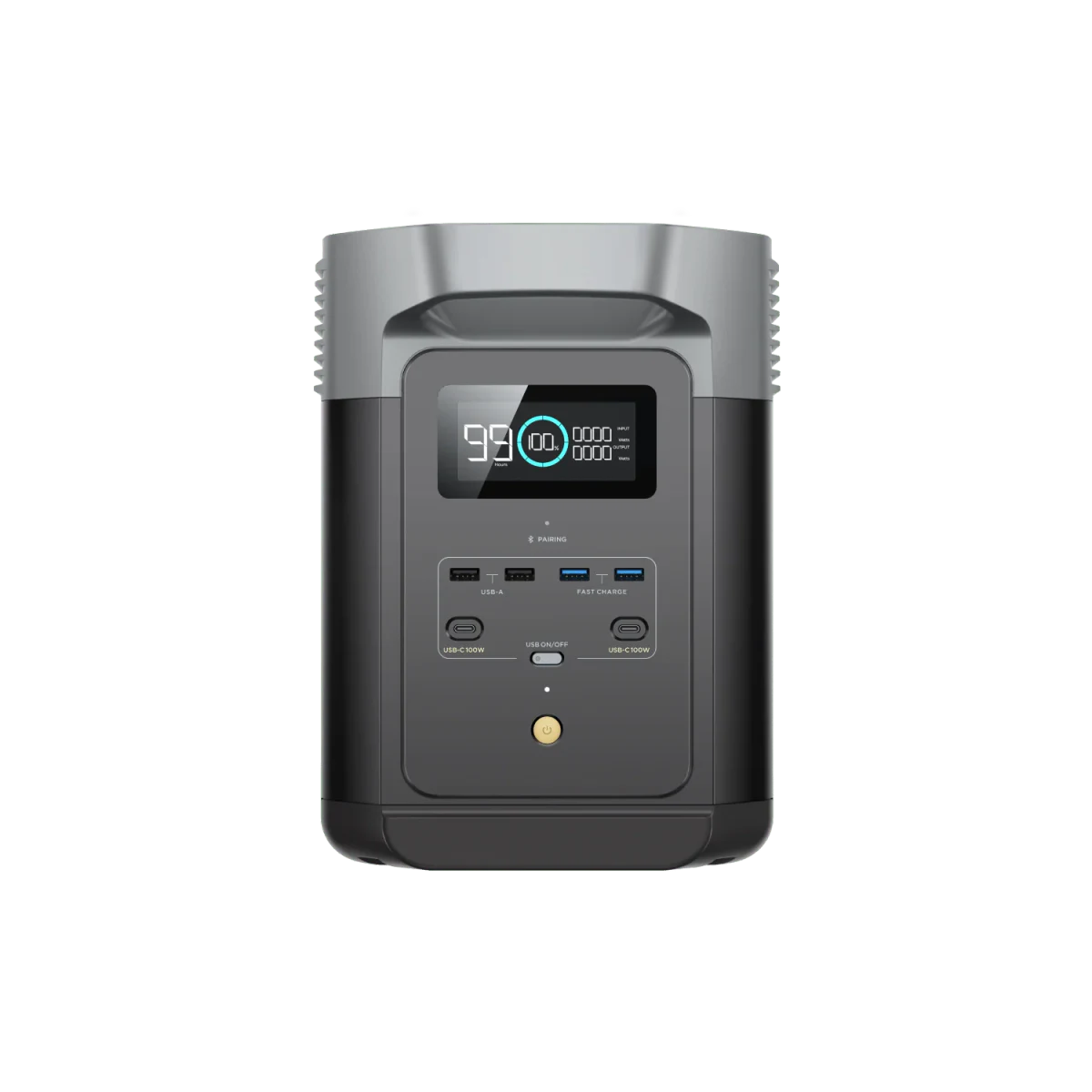
Estimated runtime4h 45m2h 58m – 5h 54mEstimated runtime: 4h 45m, 2h 58m – 5h 54m
Device scenario
Output path
Fridges cycle on and off. The calculator treats the entered wattage as compressor running wattage and applies a duty-cycle estimate.
Estimated runtime
Exceeds a tracked power limit — do not rely on these hours
This is an estimate. Real runtime changes with load, temperature, battery age, AC/DC output, and device behavior. Runtime is conditional on successful startup, compatible voltage/connectors and sufficient output. Verify the actual device setup before relying on these hours.
4h 45mEstimated runtime: 4h 45mExceeds a tracked power limit — do not rely on these hours
Conservative2h 58m
Estimated4h 45m
Optimistic5h 54m
These are calculated sensitivity cases, not a statistical confidence interval. Conservative uses lower efficiency and battery health, more reserve/temperature loss and higher load; optimistic changes these assumptions in the opposite direction.
- This is an estimate. Real runtime changes with load, temperature, battery age, AC/DC output, and device behavior. Runtime is conditional on successful startup, compatible voltage/connectors and sufficient output. Verify the actual device setup before relying on these hours.
- Exceeds a tracked power limit — do not rely on these hours
- The largest startup surge (2900 W) is above the selected station surge rating (2700 W).
Show your work
Rated Wh is reduced by efficiency, reserve, battery health, and temperature before it is divided by average load.
- Rated battery
- 1024 Wh
- Usable energy
- 783 Wh
- 1024 Wh x 85% x 90% x 100% x 100%
- Running watts
- 500 W
- Average load
- 165 W
- 500 W running, 165 W average after duty cycle and quantity
- Max surge
- 2900 W
- Fixed station overhead
- Unknown (not included)
- 165 W / 85% = 194.1 W battery draw; fixed overhead is unknown and excluded
- Estimated runtime
- 4h 45m
- 783 Wh / 165 W = 4h 45m
- Output path
- AC inverter
- Efficiency (%)
- 85
- Reserve kept unused (%)
- 10
- Battery health (%)
- 100
- Cold weather loss (%)
- 0
This link contains the numeric values you entered, but not custom load names.
Source-Backed Next Steps
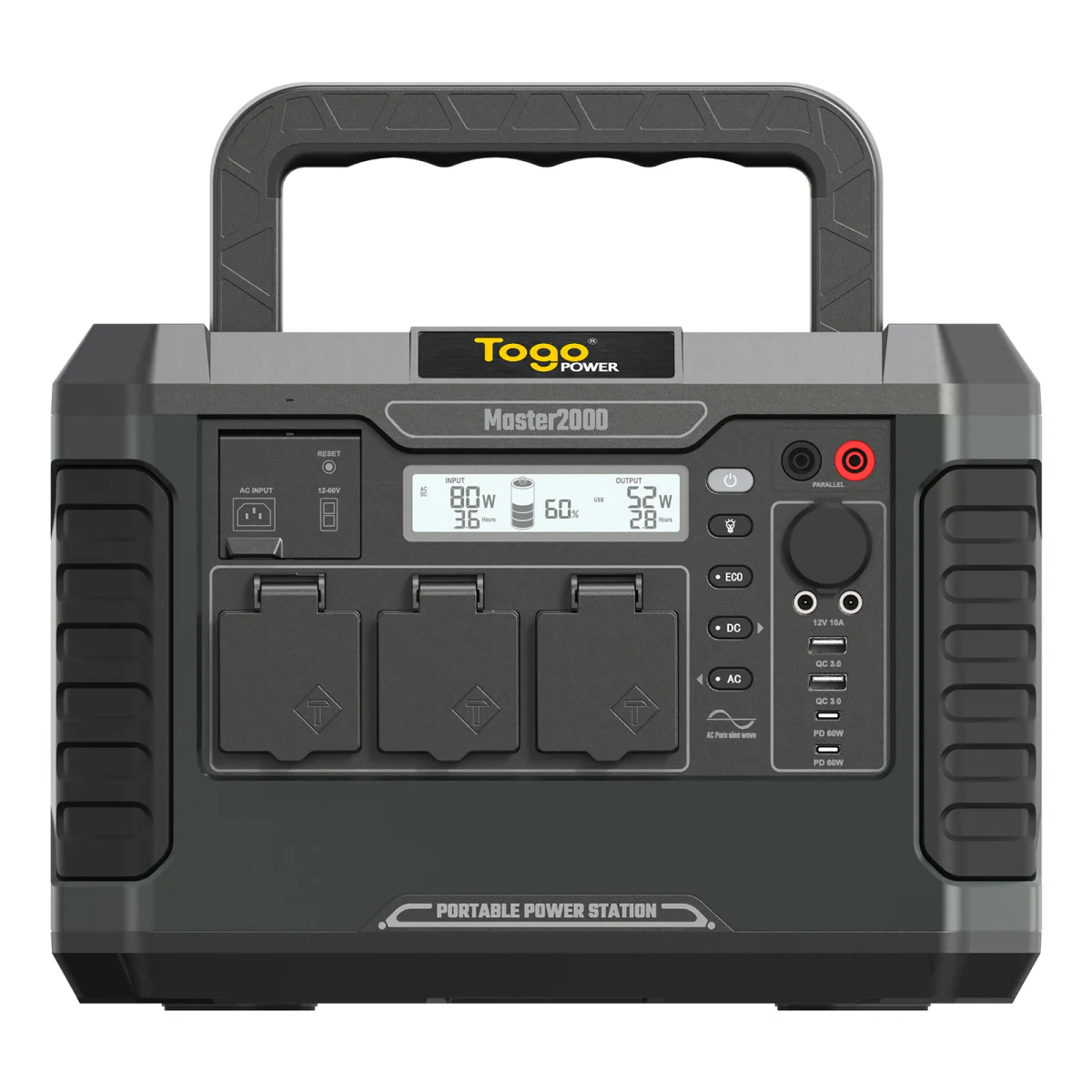
Smallest matching record (8h)TogoPower Master 2000
WattRunTime.com
WattRunTime estimate
Estimated runtime
4h 45mExceeds a tracked power limit — do not rely on these hoursUsable energy783 Wh
Average load165 W
Fixed station overheadUnknown (not included)
Running watts500 W
Max surge2900 W
Runtime range
Conservative2h 58m
Estimated4h 45m
Optimistic5h 54m
Show your work
Rated Wh is reduced by efficiency, reserve, battery health, and temperature before it is divided by average load.
Usable energy783 Wh1024 Wh x 85% x 90% x 100% x 100%
Average load165 W500 W running, 165 W average after duty cycle and quantity
Fixed station overheadUnknown (not included)165 W / 85% = 194.1 W battery draw; fixed overhead is unknown and excluded
Estimated runtime4h 45m783 Wh / 165 W = 4h 45m
Assumptions
- 1024 Wh nominal battery capacity
- AC inverter output path
- 85% conversion efficiency
- 10% reserve kept unused
- 165 W average load from 1 load
- 100% battery health
- 0% temperature loss
- Fixed station overhead unknown; not included
Warnings
- This is an estimate. Real runtime changes with load, temperature, battery age, AC/DC output, and device behavior. Runtime is conditional on successful startup, compatible voltage/connectors and sufficient output. Verify the actual device setup before relying on these hours.
- Exceeds a tracked power limit — do not rely on these hours
- The largest startup surge (2900 W) is above the selected station surge rating (2700 W).
Share URL
Best for
Estimate outage runtime for refrigerator backup.
Full-size refrigerator worked example
A 1,024 Wh station with 10% reserve and 85% efficiency leaves about 783 Wh before load behavior. Using this page's 500 W default at 33% duty cycle, the planning load is about 165 W and the estimate is 4h 45m.
Change first
- Change duty cycle first if the device cycles more or less often than the default.
- Check startup surge for motors, compressors, and pumps.
- Use measured watts for outage or medical-adjacent planning.
If the fridge shows an error
After an outage, runtime math is only one part of recovery. If the refrigerator displays a code, look it up before cycling power repeatedly.
Full-size refrigerator assumptions
Review the Full-size refrigerator scenario page when you need the wattage range, duty cycle, confidence label, and source notes before calculating runtime.
This calculator gives a planning estimate. Treat the result as a starting point, then refine it with measured watts, the device manual, and the station's current output limits.
Verify your watts
- Check the device label for running watts or input amps and volts.
- Use a plug-in watt meter for AC loads when the result matters.
- For cycling loads, measure long enough to capture on/off behavior.
Check output path
- AC inverter loads usually lose more energy than direct DC loads.
- Keep reserve for cold weather, battery age, and load changes.
- Do not treat label capacity as fully usable watt-hours.
Check surge and output
- Runtime does not prove a station can start a compressor or motor.
- Compare device startup watts with the station surge rating.
- Compare running watts with the station continuous output rating.
Related Guides
Use these explainers when an assumption changes the runtime result.
Load behavior guide
Duty Cycle Explained
Apply the guide to this use case's load and operating pattern.
Device measurement guide
How to Measure Device Watts for Runtime Planning
Choose a source-linked running load before estimating runtime.
Related Calculators
Use the related tools when charging, sizing, surge, or power path changes the answer.
FAQ
These answers keep the estimate grounded in assumptions instead of pretending runtime is exact.
Can a power station run a refrigerator overnight?
Often yes, but the answer depends on battery Wh, fridge running watts, compressor duty cycle, room temperature, and startup surge. Always check surge capability.
Why does the fridge setting use a duty cycle?
Refrigerator compressors cycle on and off. The calculator uses duty cycle to convert running watts into a more realistic average load.
Why are surge watts different from running watts?
Motors and compressors can need a short startup burst. A station must handle both continuous running wattage and short surge wattage.
Why is real runtime lower than the label capacity?
Battery label capacity is nominal. Inverter losses, DC conversion losses, reserve settings, cold weather, battery age, and changing device loads all reduce real runtime.
How do you calculate portable power station runtime?
Use usable watt-hours divided by average load watts. For AC loads, a practical first-pass formula is battery Wh x efficiency x reserve factor divided by device watts.
Why should I measure with a watt meter?
Device labels are often maximum ratings. A watt meter shows real average draw and makes runtime estimates much more reliable.