
Menu
Jackery Explorer 880 Pro Runtime Calculator
Quick answer: the Jackery Explorer 880 Pro stores 881 Wh and delivers up to 1,000 W of continuous AC power. Under this site's planning assumptions (85% inverter efficiency, 10% reserve), a steady 100 W AC load runs for roughly 6.7 hours. Last source check: 2026-10-25. This is an estimate, not a guarantee.
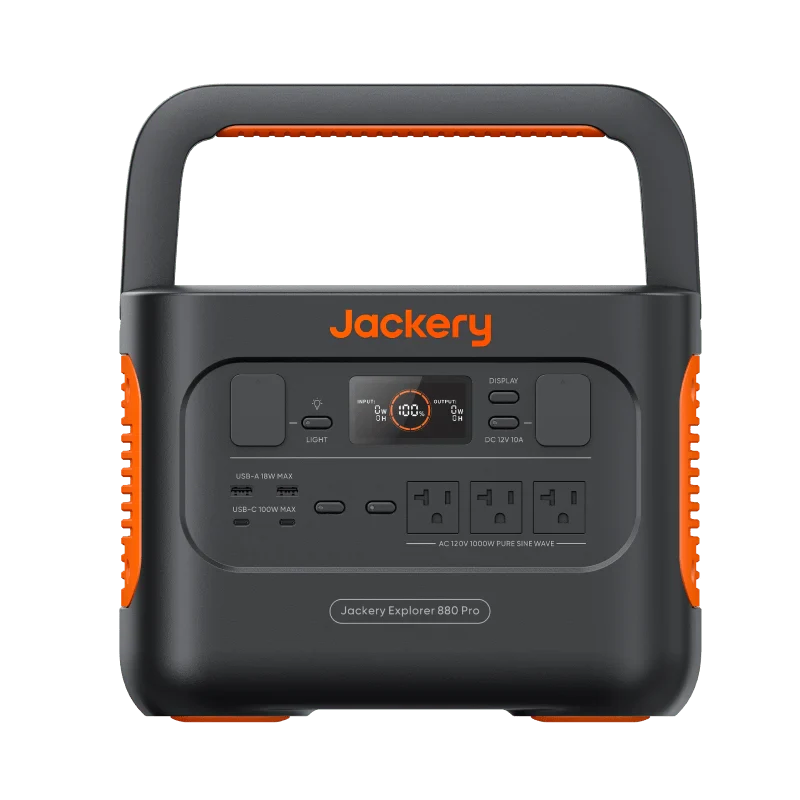
Battery capacity881 Wh
AC output1,000 W
Surge output2,000 W
Battery chemistryLithium-ion
ConfidenceVerified
Source regionRegional source
checked2026-10-25
| Battery capacity | 881 Wh |
|---|---|
| Battery chemistry | Lithium-ion |
| AC output | 1,000 W |
| Surge output | 2,000 W |
| DC output | 120 W |
| USB-C output | 100 W |
| Solar input | 400 W |
| Weight | 11 kg |
| Confidence | Verified |
| Lifecycle status | Unknown |
| Source region | Regional source |
| Last verified | 2026-10-25 |
Catalog notes (original English)
Canadian-store-linked 120V JE-880B record, separate from the legacy Explorer 880. Capacity uses the manual and station table's 881Wh rather than the 880Wh marketing headline. Chemistry remains the published generic lithium-ion description; no NMC/LFP subtype is inferred. USB-C stores the highest single-port 100W, not a sum of ports. The explicit 400W dual-input ceiling is independent of the bundled 100W panel. Approximate weight is 11kg for the station, excluding solar panels and cables.
Regional source note Some specs are cross-checked against official regional pages. Regional SKUs can differ; verify the manufacturer page for your market before purchase or emergency planning. ca.jackery.com: Jackery Explorer 880 Pro Canada station specifications, cdn.shopify.com: Jackery Explorer 880 Pro JE-880B user manual
Runtime estimate
Formula starting points use each scenario’s default watts, duty cycle and output path, with 10% reserve or 15% for CPAP. Linked detail pages use the same inputs. Hours apply only if the device can run and start; they are not measured runtimes.
Swipe table sideways
| Device scenario | Planning default | Estimated runtime | Device scenario: Confidence | Models |
|---|---|---|---|---|
| Full-size refrigerator | 500 W · 33% · AC inverter · Reserve: 10% | 4h 5m Exceeds a tracked power limit — do not rely on these hours | Estimated | Calculator |
| CPAP without heated humidifier | 40 W · 100% · AC inverter · Reserve: 15% | 15h 55m Within the tracked power limits; compatibility still needs checking | Estimated | Calculator |
| Starlink Mini | 32 W · 100% · USB-C PD · Reserve: 10% | 22h 48m Within the tracked power limits; compatibility still needs checking | Estimated | Calculator |
| Wi-Fi router | 12 W · 100% · AC inverter · Reserve: 10% | 2d 10h Within the tracked power limits; compatibility still needs checking | Estimated | Calculator |
| LED TV | 100 W · 100% · AC inverter · Reserve: 10% | 6h 44m Within the tracked power limits; compatibility still needs checking | Estimated | Calculator |
Runtime calculator
Runtime is conditional on successful startup, compatible voltage/connectors and sufficient output. Verify the actual device setup before relying on these hours.
Loading calculatorPreparing calculator
This tool didn't load
Something blocked the calculator from starting. Check your connection or reload the page to try again.
Power station model
Battery capacity (Wh): 881 WhAC inverter: 1000 WSurge output rating (W): 2000 W
Estimated runtime11h 14m7h 2m – 13h 57m
Within the tracked power limits; compatibility still needs checking
Estimated runtime: 11h 14m. 7h 2m – 13h 57m. Within the tracked power limits; compatibility still needs checkingOutput path
Estimated runtime
Within the tracked power limits; compatibility still needs checking
This is an estimate. Real runtime changes with load, temperature, battery age, AC/DC output, and device behavior. Runtime is conditional on successful startup, compatible voltage/connectors and sufficient output. Verify the actual device setup before relying on these hours.
11h 14mEstimated runtime: 11h 14m. 7h 2m – 13h 57m. Within the tracked power limits; compatibility still needs checkingThis setup may cover a partial outage or single overnight session. Add capacity for more margin.
Conservative7h 2m
Estimated11h 14m
Optimistic13h 57m
These are calculated sensitivity cases, not a statistical confidence interval. Conservative uses lower efficiency and battery health, more reserve/temperature loss and higher load; optimistic changes these assumptions in the opposite direction.
- This is an estimate. Real runtime changes with load, temperature, battery age, AC/DC output, and device behavior. Runtime is conditional on successful startup, compatible voltage/connectors and sufficient output. Verify the actual device setup before relying on these hours.
- Within the tracked power limits; compatibility still needs checking
Show your work
Rated Wh is reduced by efficiency, reserve, battery health, and temperature before it is divided by average load.
- Rated battery
- 881 Wh
- Usable energy
- 674 Wh
- 881 Wh x 85% x 90% x 100% x 100%
- Running watts
- 60 W
- Average load
- 60 W
- Max surge
- n/a
- Fixed station overhead
- Unknown (not included)
- 60 W / 85% = 70.6 W battery draw; fixed overhead is unknown and excluded
- Estimated runtime
- 11h 14m
- 674 Wh / 60 W = 11h 14m
- Output path
- AC inverter
- Efficiency (%)
- 85
- Reserve kept unused (%)
- 10
- Battery health (%)
- 100
- Cold weather loss (%)
- 0
This link contains the numeric values you entered, but not custom load names.
Source-Backed Next Steps
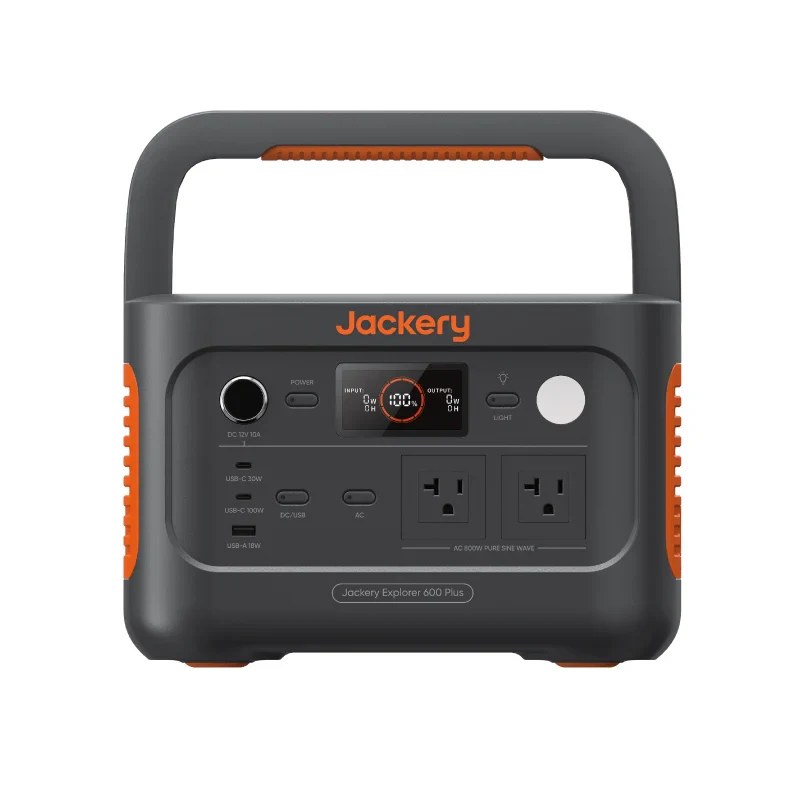
Smallest matching record (8h)Jackery Explorer 600 Plus
WattRunTime.com
WattRunTime estimate
Estimated runtime
11h 14mThis setup may cover a partial outage or single overnight session. Add capacity for more margin.Usable energy674 Wh
Average load60 W
Fixed station overheadUnknown (not included)
Running watts60 W
Max surgen/a
Runtime range
Conservative7h 2m
Estimated11h 14m
Optimistic13h 57m
Show your work
Rated Wh is reduced by efficiency, reserve, battery health, and temperature before it is divided by average load.
Usable energy674 Wh881 Wh x 85% x 90% x 100% x 100%
Fixed station overheadUnknown (not included)60 W / 85% = 70.6 W battery draw; fixed overhead is unknown and excluded
Estimated runtime11h 14m674 Wh / 60 W = 11h 14m
Assumptions
- 881 Wh nominal battery capacity
- AC inverter output path
- 85% conversion efficiency
- 10% reserve kept unused
- 60 W average load from 1 load
- 100% battery health
- 0% temperature loss
- Fixed station overhead unknown; not included
Warnings
- This is an estimate. Real runtime changes with load, temperature, battery age, AC/DC output, and device behavior. Runtime is conditional on successful startup, compatible voltage/connectors and sufficient output. Verify the actual device setup before relying on these hours.
- Within the tracked power limits; compatibility still needs checking
Share URL
Planning notes
- Capacity class: 881 Wh. Size the battery for your measured average load and required hours, including reserve.
- Tracked output: 1,000 W. Compare both running demand and startup demand before using any runtime estimate.
- Solar input limit: 400 W. Actual refill depends on panel voltage/current compatibility, sunlight, angle and charging losses.
Known data gaps
- Unverified or missing specifications remain visible. The confidence label describes the station record, not a tested runtime or approval for emergency use.
- Weight: 11 kg. Check the complete carrying setup, cables and battery extensions before choosing this model for travel.
Models: Jackery
Compare nearby capacity records from the same brand, then check output, weight and missing fields. A larger battery does not establish device compatibility.
Jackery Explorer 880
880 Wh · AC output: 1,000 W · Confidence: Estimated
Jackery 900 (Japan)
960 Wh · AC output: 1,500 W · Confidence: Estimated
Jackery Explorer 1000 Pro
1,002 Wh · AC output: 1,000 W · Confidence: Verified
Sources
- Jackery Explorer 880 Pro Canada station specifications (Official; checked 2026-10-25)
- Jackery Explorer 880 Pro JE-880B user manual (Official; checked 2026-10-25)